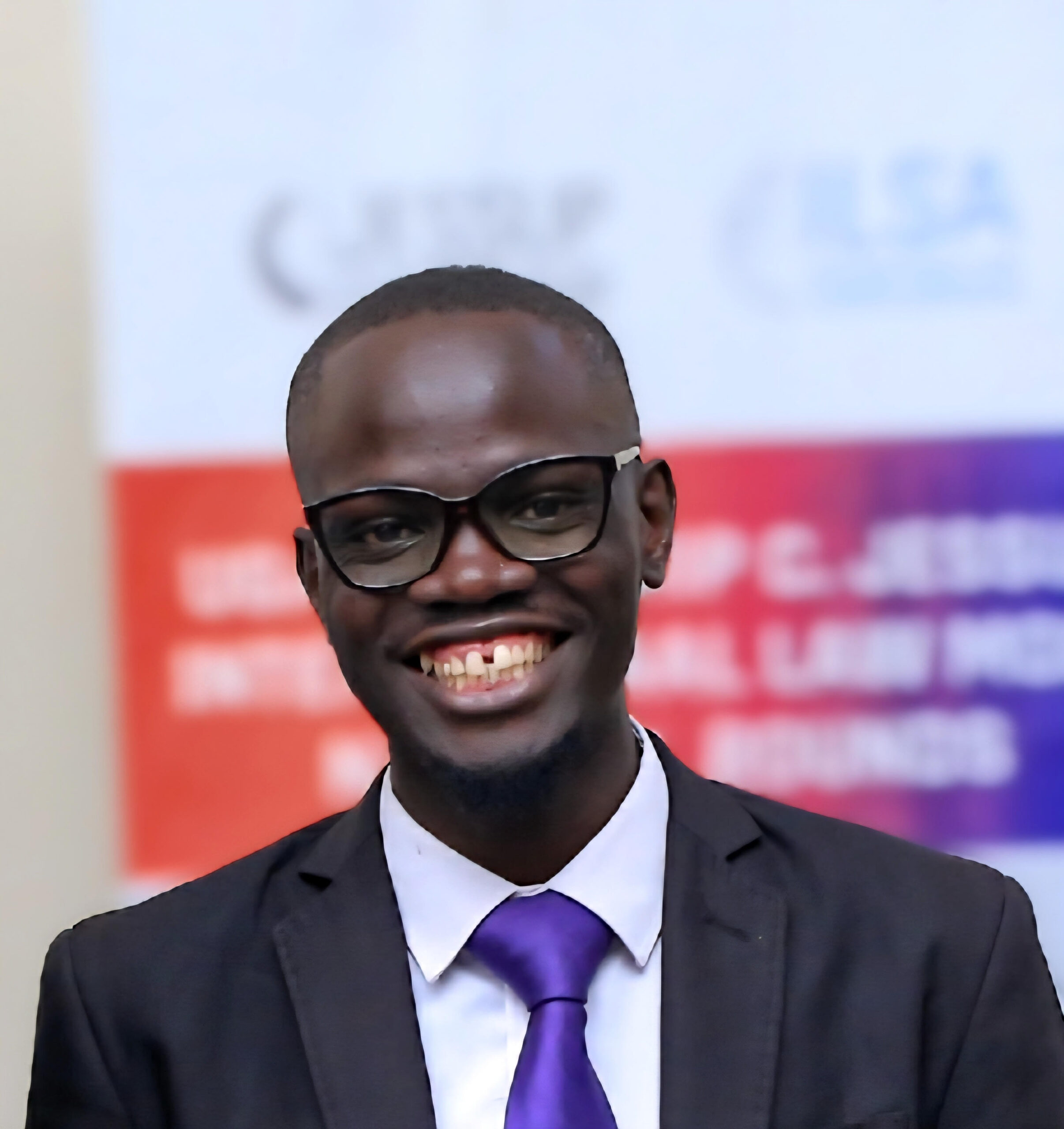
SGAC announces the winners of the Global Rising Stars Award 2025
One of the main missions of SGAC is to facilitate access to the world’s major space conferences for young professionals and students. The Global Rising Stars Award enables emerging SGAC star members to attend the 23rd Space Generation Congress (SGC): 25-27 September 2025 and 76th International Astronautical Congress (IAC): 29 September – 3 October 2025 in Sydney, Australia.
SGAC is proud to announce that four outstanding SGAC members have been selected to win the Global Rising Stars Award for their relentless contribution towards the growth of their local space community. This Scholarship facilitates the attendance of international delegates who bring unique and insightful firsthand perspectives to the Space Generation Congress.
Congratulations to all the winners!!
Pooja Lepcha (Bhutan)

Pooja Lepcha is a Satellite Systems Engineer at the Division of Telecom and Space under the Government Technology Agency, Bhutan. In 2017, she was awarded the prestigious UN/Japan Long-Term Fellowship “Postgraduate Studies on Nano-Satellites (PNST),” which enabled her to pursue both a master’s and a doctoral degree in Space Engineering at the Kyushu Institute of Technology, Japan. During her time at Kyutech, she contributed to over 10 satellite missions, including BHUTAN-1, Bhutan’s first satellite, developed under the BIRDS-2 project. Her technical expertise lies in Electrical Power Systems (EPS) and remote data collection using satellite technology. Currently, Pooja is leading Bhutan’s first in-country satellite development project—an Earth observation satellite that brings together the contribution of local engineers. She also coordinates educational satellite initiatives, enabling students from Bhutanese colleges to gain hands-on experience through joint satellite projects with international partner institutions. Beyond her engineering work, Pooja is deeply committed to space education and outreach. She regularly visits schools across Bhutan to promote space science and inspire young minds. She also played a key role in developing Bhutan’s first formal space science curriculum, contributing significantly to the country’s long-term goals in STEM education and national capacity building. She is the point of contact for SGAC from Bhutan.
” I am truly honoured to receive the Global Rising Star award from SGAC. Coming from Bhutan, a country with limited representation in international space events, this recognition holds great significance. I’m grateful to SGAC for not only acknowledging Bhutan’s humble but growing efforts in space, but also for offering a platform to connect with a global network of professionals and stay engaged with the latest developments in the space sector.”
Marcelo German Boldt (Argentina)

Marcelo German Boldt is a Structural Engineer at Polaris Spaceplanes GmbH, Co-Founder of Orion Outreach, a STEAM education NGO in Costa Rica dedicated to inspiring the next generation of space professionals, and Project Group Co-Coordinator of the Space Generation Advisory Council (SGAC) He specializes in reusable space vehicles, defense tech, and advanced manufacturing with expertise in hypersonics, and structural design. Additionally, he is a consultant at Mandala Space Ventures, a space venture capital fund located in Los Angeles, California.
“I am thrilled and honored to be one of the recipients of the SGAC Global Rising Stars Award 2025 and share the stage with many amazingly talented students and young professionals. I look forward to engage with the space community and to make meaningful contributions to my region and our industry!”
Dorely Medina Leal (Mexico)

Dorely Medina Leal is a medical student whose academic trajectory is focused on aerospace biomedicine, sex-differentiated human physiology, and health systems innovation in extreme environments. She is the author of “Female Adaptations to Microgravity and Extreme Environments: Implications for Aerospace Medicine and Human Spaceflight,” a foundational contribution exploring sex-specific responses in the musculoskeletal, cardiovascular, immunological, and neurovestibular systems during spaceflight. She has also contributed to the design and development of Spiruoxyn, a synthetic biology prototype for in-situ glucose and oxygen generation in closed-loop space habitats. Her academic portfolio includes emerging work in neurodiverse vestibular adaptation, telemedicine architectures modeled on spaceflight systems, and the biomedical implications of microgravity-induced joint degradation. She is the creator of the platform Health for Her, and author of multiple science outreach initiatives. Dorely has presented her work in scientific and policy forums, including the Mexican Senate, and has represented Mexico at ECLAC–UN, the Alianza del Pacífico in Chile, and the First Parliament of Young Women, where she proposed the national initiative ANDROMEDA for gender equity in aerospace and medicine. She is also part of the 2025 University of Oxford Summer School cohort and has won multiple awards such as NAÁYERI Award for Academic Excellence, NAÁYERI Award for Youth Leadership, Kybernus Award for Social Leadership and Mujer Tec 2024.
“Receiving the Global Rising Star Award is an honor that reminds me that the greatest spark is not the one ignited in rockets or stars, but the one born within ourselves. I am truly grateful and motivated to continue advancing aerospace innovation while inspiring others to believe that space belongs to everyone.”
Miriam Opazo Mendez (Spain)

Miriam Opazo Mendez (Mia Omen) is a scientist and engineer specialising in human performance in extreme environments. After earning a dual Bachelor’s in Physics and Mathematics from the Autonomous University of Barcelona (Spain), she pursued a Master’s in Aerospace Engineering at ISAE-SUPAERO (France). Mia has worked with the French Space Agency (CNES) on the development of human missions to the Moon and Mars, focusing on human factors and mission operations. Beyond the technical frontier, Mia is a dedicated advocate for youth leadership and international cooperation, collaborating with institutions such as the United Nations and the European Union. At SGAC, she contributes to a range of projects requiring human-centred expertise, from survival systems to long-term mission design. Her mission is to help humanity survive and evolve on and beyond Earth through science, exploration, and global unity.
“I am incredibly honoured to receive the Global Rising Star award and sincerely grateful to SGAC for this recognition. It inspires me to keep pushing the boundaries of what is possible and to continue building a future in space that is united, visionary, and deeply human.”