
EVENT MANAGERS
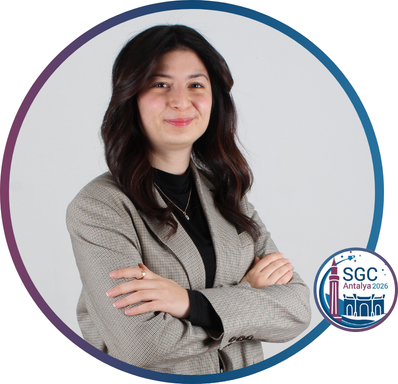
EVENT MANAGER
Emira Nur Aslan
Emira Nur Aslan graduated from Middle East Technical University in 2025 with a degree in Physics and a concentration in optoelectronics and photonics. She previously worked as a Business Development Specialist for the MENA region at INFINIA. She currently works as an Optical Design Engineer in the defense sector.
Alongside her professional career, Emira is actively involved in the global space community through the Space Generation Advisory Council (SGAC). She served as Event Manager for the 3rd Middle East Space Generation Workshop (ME-SGW) held in Ankara in 2025 and participated as a delegate at the SGC in Milan 2024 and Sydney 2025. She has also presented multiple papers at the International Astronautical Congress (IAC).
In addition, she is a member of the ACCESS – MECA Subcommittee within the International Astronautical Federation (IAF), contributing to international collaboration and activities within the global space sector.
Through her technical work and international engagement, Emira is passionate about advancing space technologies, fostering international collaboration, and supporting the next generation of space professionals from emerging space nations.

DEPUTY MANAGER
Linda Ngozwana
Linda Ngozwana is a Systems Engineer with proven experience on the end-to-end development of advanced satellite systems. Born and raised in South Africa, Linda’s journey into space engineering reflects both technical excellence and a deep commitment to breaking barriers. She holds a Master’s degree in Astronautics and Aerospace Engineering from Cranfield University, where her research focused on applying Model-Based Systems Engineering (MBSE) to complex satellite manoeuvres and understanding its influence on satellite design.
Beyond her technical work, Linda is passionate about expanding access to space careers and empowering young people to dream boldly. She has been actively involved with global and grassroots organisations including Women in Aerospace-UK, the Space Generation Advisory Council (SGAC), UNITE 2030, and the Girl Fly Africa Foundation, all working toward the UN Sustainable Development Goals and increasing diversity in STEM. Linda is also a co-founder of Moonshot Africa, a South Africa–based talent accelerator dedicated to empowering the next generation of African rocket scientists and space leaders.
Linda proudly represents a generation of leaders not defined by their origins, but by their ambition, courage, and determination to create meaningful change. Her work and impact have been recognised internationally, including a career feature on CNN and multiple publications across African media highlighting her efforts to inspire and uplift young people
DELEGATES TEAM
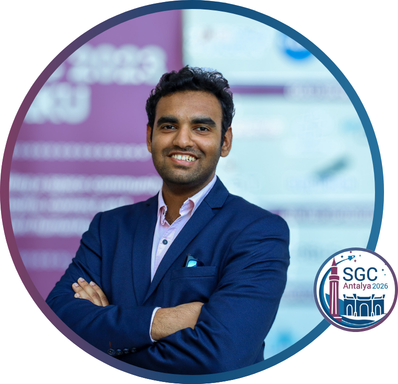
TEAM CO-LEAD
Deep Anand
Deep Anand is a systems engineer with a background in aerospace engineering, currently working in the Founder’s Office at Astrogate Labs. His role spans strategy, systems thinking, business development, and the hands-on development and integration of optical communication systems across space, terrestrial, airborne, and maritime domains. His technical interests lie in Model-Based Systems Engineering (MBSE), systems architecture, and the development of enabling technologies for ambitious cislunar and interplanetary missions. His work sits at the intersection of engineering and strategy, with a particular focus on translating emerging technologies into real-world capabilities. Deep has contributed to multiple publications spanning systems engineering, space economy & policy, and forward-looking concepts for the future of the space sector.
Beyond his professional pursuits, Deep is deeply committed to the growth of the global space community. Within the Space Generation Advisory Council (SGAC), he serves in multiple capacities, including Membership Coordinator for the Space Safety and Sustainability Project Group and Projects & Students Coordinator for the ACHIEVED Academy. He was also part of the organizing team for the SGC 2025 and is currently involved in organizing India’s first Space Policy Hackathon, a joint initiative between SGAC and the Satellite Industry Association (SIA)-India. Through these roles, he actively contributes to fostering collaboration, education, and professional development within the international space community.
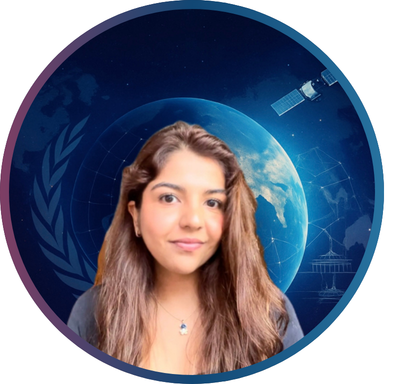
Paola Alejandra
Zamudio Torres
Paola Zamudio Torres is a Mexican lawyer and space law researcher working at the intersection of international law, space governance and global space policy. She currently serves as National Point of Contact (NPoC) for Mexico at SGAC, where she also contributes to the Space Law & Policy Project Group and supports international outreach and community-building initiatives. She is additionally Co-Chair of the Space Law Interest Group at the American Society of International Law (ASIL).
Her work focuses on space sustainability, responsible behavior in outer space and the inclusion of emerging space actors, particularly from Latin America. In addition to her international work, she collaborates in a consultancy capacity on matters related to outer space affairs and international cooperation within the governmental sphere in Mexico. Paola has presented research at international forums including the International Astronautical Congress (IAC), where her work has explored topics such as export control barriers, inclusive governance and the implementation of responsible behavior frameworks in space security.
Beyond research, she is actively involved in educational and outreach initiatives through organizations such as She Orbits, Re.Brand Academy, Space Court Foundation and AstroAid Foundation, where she supports mentorship, accessibility and interdisciplinary participation in the space sector. Through both her legal and community-focused work, Paola is passionate about building more inclusive pathways into the global space industry and strengthening Latin America’s presence within international space conversations.
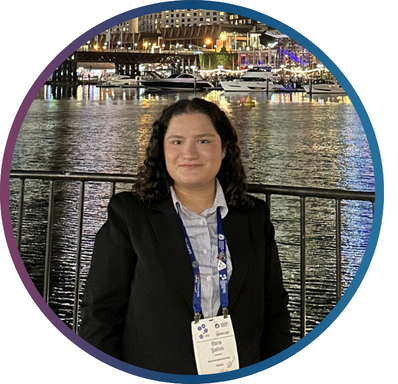
Esra Şahin
Esra Şahin is a senior Electrical and Electronics Engineering student at Bursa Technical University, specializing in satellite electronics and space mission design. She is currently leading the Electrical Power Systems (EPS) subsystem for Team Weiss at the Space Station Design Workshop 2026 in Munich, where she manages the full design cycle and system architecture. Her research portfolio includes presenting work on Single Event Effects in CubeSats at the SSEA in Germany and advocating for STEM inclusivity at the International Astronautical Congress (IAC) in Sydney.
Her commitment to social impact and the global space community is reflected in her extensive volunteer work through the Space Generation Advisory Council (SGAC) and various humanitarian initiatives. She first supported regional collaboration as a Delegates Team Member for the Middle East Space Generation Workshop (ME-SGW) in 2025 and is currently serving in a similar capacity for the Space Generation Congress (SGC) 2026 in Antalya. Alongside her space-related roles, Esra has been a dedicated advocate for gender equality in tech and has actively supported university students affected by natural disasters. By blending her engineering expertise with a strong sense of social responsibility, she works to foster international dialogue and support a more inclusive generation of professionals.

Kiah May
Kiah May is an aerospace engineer and emerging leader in the global space community, with a strong focus on human spaceflight, leadership development, and international collaboration. She currently works as a systems engineer on large satellites and in civil space business development at BAE Systems, Inc. Space & Mission Systems in Colorado, USA. She is also a researcher on the Fill In the Gap in hUman REsearch in Space (FIGURES) project as part of the SGAC’s Diversity and Gender Equity (Our Giant Leap) Project Group. Kiah’s technical experience spans human spaceflight systems, including work on next-generation spacesuits at Axiom Space, large satellites, orbital transfer vehicles, planetary science and exoplanet research at the NASA Jet Propulsion Laboratory, and human-centered research for long-duration missions. She is particularly interested in crew performance, leadership in extreme conditions, and the future of humanity beyond Earth. Through her technical and leadership work, Kiah is driven by a commitment to service-oriented leadership, global cooperation, and building inclusive pathways into the aerospace industry. She is particularly passionate about empowering the next generation of space leaders to approach exploration with empathy, responsibility, and a long-term vision for humanity in space. She holds an M.E. in Engineering Management and a B.S. in Aerospace Engineering from the University of Colorado Boulder.

PROGRAMMING TEAM
TEAM LEAD
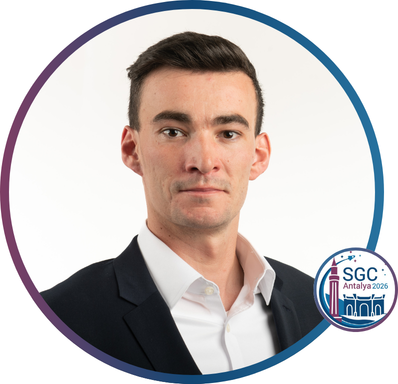
Theodor Heutling
Theodor Heutling is a research associate at the Chair of Space Systems at Technische Universität Dresden, where he works on space transportation and space infrastructure. His background combines engineering, project management, and international research collaboration, with experience in both academia and industry, including work on additive manufacturing at MTU Aero Engines and CTC GmbH (an Airbus company).
He is currently pursuing a PhD focused on lunar in-situ resource utilization (ISRU), with particular emphasis on materials and processes for the development of lunar landing infrastructure. In parallel, he is involved in several European research initiatives and serves as Project Manager of the MSCA Doctoral Network SLICE (Space Launch Impact on Climate and Environment), which investigates the environmental impact of space launch systems.
Within the Space Generation Advisory Council (SGAC), he has been actively engaged in the organisation of the Space Generation Congress, serving as Programming Team Lead for SGC 2024 in Milan and as a member of the Programming Team for SGC 2025 in Sydney. He is also a member of the VDI Advisory Board for Aerospace Engineering. In his free time, he enjoys sailing, skiing, and climbing.

Brearne Chen
Brearne Chen is a Senior Network Engineer specialising in RF engineering, antenna and system design, and satellite spectrum regulation. Her work involves technical RF analysis, ground-segment engineering, and international spectrum coordination through ITU processes, with experience across both engineering and regulatory domains.
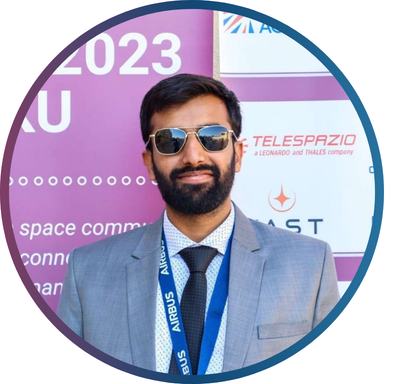
Talha Noor
Talha brings a wealth of experience in multiple domains. As an AW-139 Pilot with certifications in NVIS, Maritime, and Multi-Purpose Operations, along with extensive Pilot-in-Command experience of more than 1000 flying hours, He has demonstrated proficiency in a range of aircraft systems, including Turbo-props, Turbojets, and Helicopters over an impressive 10-year span. With a Flight Safety Officer certification as well as a Post Graduation Diploma in Flight Safety Management, Talha is committed to ensuring the highest standards of safety in Aviation. He is currently doing his Masters in Int’l Relations and Strategic Studies. His achievements in the domain of space have been recognized globally, receiving the IAU’s Telescope Award in 2022 for his contributions in space education, and the Nebula Award from the SGAC in 2023. He served as Pakistan’s NPoC for SGAC from 2022-2024 and contributes actively to the global space community through his work. Few notable highlights of his work are bringing the NASA Citizen Scientist Program to Pakistan and being a part of the Organizing Teams of SGC2023, SGC2024 and now SGC2026. Engaging with govt and corporate setups for space education since last six years, Talha is also a dedicated Space Communicator. Additionally, his entrepreneurial spirit is reflected in founding Skypie, a decentralized, non-fungible collection of artworks, and co-founding Hustlers, a community of artists from across the globe. His multifaceted skills extend beyond aviation to include Scuba Diving certification from Scuba Club Karachi and HUET (Helicopter Underwater Escape Training) certification as well.
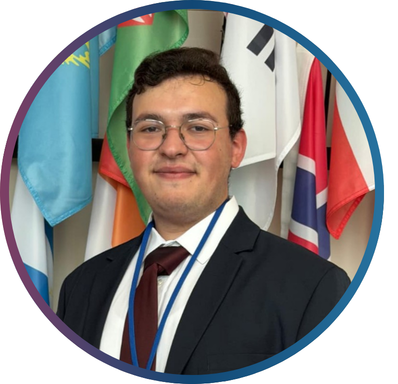
Veysel AKSU
Veysel Aksu is an undergraduate physics student at Erciyes University and a dedicated science communicator. He is currently working with the Erciyes Neutrino Research Group, which collaborates with Fermilab and UC Berkeley. His primary interests lie in particle physics, astrophysics, and space technologies. Veysel has extensive experience in national and international scientific communities. He serves as the General Coordinator of the Bebar Science Society, one of the largest science communities in Türkiye. He was the NASA International Space Apps Challenge Kayseri Local Lead for 2025, where he organized the local event. Additionally, he was awarded the Middle East Space Leaders Award by the Space Generation Advisory Council (SGAC). He is the founder of the Erciyes Physics Society and has served as an SGAC delegate at the United Nations COPUOS Scientific and Technical Subcommittee (STSC). He has also served on the Program Team of the Middle East Space Generation Workshop (ME-SGW) 2025 and is currently part of the Programming Team for the Space Generation Congress Antalya. His dedication to physics, space science, and the future of humanity continues to guide his academic and professional journey.

Macarena Kunihiro
Macarena Kunihiro is a law student at Pontificia Universidad Católica de Chile, with advanced training in Intellectual Property through the World Intellectual Property Organization and Chile’s National Institute of Industrial Property. Her academic and professional focus is centered on the intersection of space law, intellectual property, and technology. She is particularly inspired by the potential of innovation and international collaboration to shape the future of the space industry. As an active member of the Space Generation Advisory Council, Macarena previously led the design and coordination of the 10th South American Space Generation Workshop (SA-SGW), and is currently part of the programming team for the Space Generation Congress 2026 (SGC).
LOGISTICS TEAM
TEAM LEAD
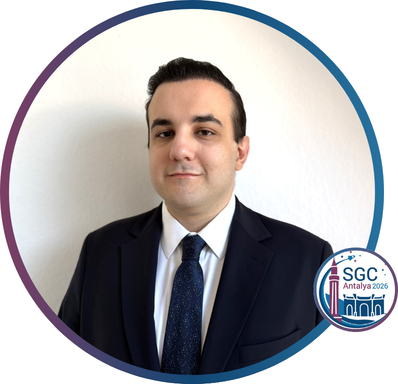
Enes Beşli
Enes Beşli is a master’s student in Remote Sensing and GIS at Leibniz University Hannover, Germany, specializing in Earth Observation, geospatial data science, and synthetic aperture radar (SAR). Building on his foundation as an undergraduate in astronautical engineering, as well as professional experience in the space sector both in Türkiye and Germany, he has developed an interdisciplinary profile that encompasses EO upstream and downstream applications.
He is actively engaged in the international space community through the Space Generation Advisory Council (SGAC) Türkiye as a community manager, where he contributes to event organization as well as outreach of space-related events and opportunities. Furthermore, he has participated in international events such as the International Astronautical Congress (IAC), European Space Generation Workshop, Living Planet Symposium, Satellite Design Workshop, and UN COPUOS 63rd STSC, where he has collaborated with professionals across engineering, policy, and industry domains.
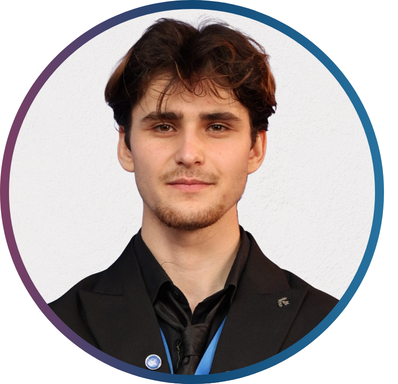
Salih Gölcük
Salih Golcuk is a psychology pupil laboriously engaged in youth work, volunteering, and transnational design collaboration. With a multidisciplinary perspective, he has taken part in multitudinous Erasmus systems both as a party and as an organizer, gaining experience in areas similar to particular development, provocation, attention operation, and cerebral adaptability. Known for designing poignant educational modules, Salih’s work frequently focuses on erecting individual mindfulness while strengthening collaborative solidarity among youthful people. His part in these systems isn’t only specialized but also deeply human centered, aiming to produce meaningful and continuing benefactions.Having an eager disposition, Salih has worked in vibrant cities throughout Turkey and has participated in international systems in some European countries. For him, traveling to different places and cultures is more than just a hobby, it expands and refines his perception of people and societies. Salih’s approach to problems and his sense of responsibility allow him to frequently act as a stabilizing and probative influence in all of the teams which he works with. By integrating his academic interests with his field experience, he aims to contribute to poignant, inclusive, and sustainable youth enterprise.
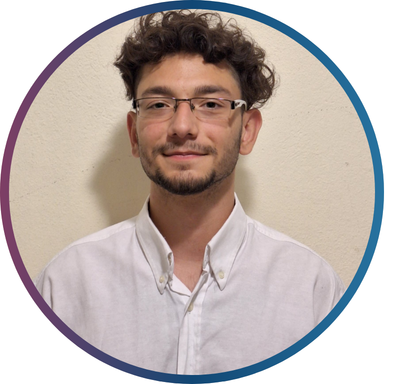
Volkan Özsoy
Volkan Özsoy is a physics undergraduate at Middle East Technical University (METU), supported by a TÜBİTAK UZAY scholarship. Introduced to space science through a bronze medal in Astronomy and Astrophysics at the TÜBİTAK Science Olympiads, he went on to contribute to published exoplanet research at Ankara University, where he developed a strong preference for experimental work. He currently focuses on photonics and space instrumentation, and is co-authoring a paper targeting IAC 2026. Volkan previously served on the organizing team of ME-SGW 25 and continues his involvement in the space community as a logistics member of SGC 2026 Antalya.
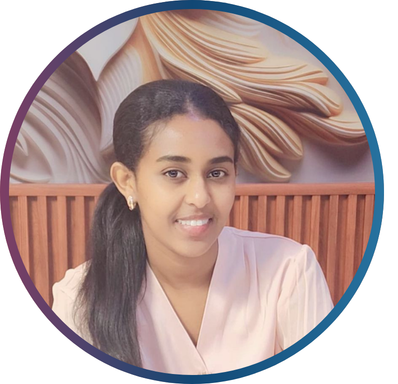
Emebet Mehabaw
Emebet Mehabaw is an Ethiopian aerospace engineer, space advocate, and emerging leader in the global space sector, passionate about human spaceflight, analog astronaut missions, and international collaboration. As the Regional Coordinator for Africa at the Space Generation Advisory Council, she is dedicated to advancing Africa’s presence in the global space industry and creating opportunities for the next generation of African space leaders. Her work focuses on space exploration, STEM advocacy, leadership development, and building inclusive pathways into the aerospace field, with a strong commitment to inspiring young people across Africa to pursue careers in science, technology, and space while contributing to a more collaborative and innovative future for humanity in space.
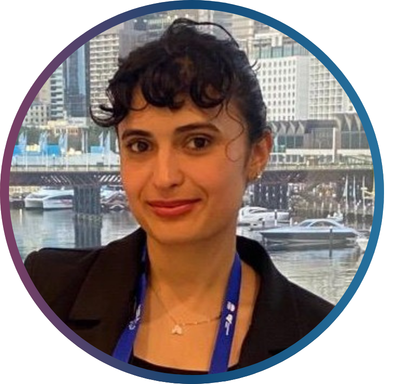
Züleyha Savcı
Züleyha Savcı is an Aerospace Engineer with an international outlook and a strong motivation to grow within the aerospace and space communities. Her interests focus on composite structures, hydrogen-powered aerospace systems, structural analysis, and system-level engineering. She has presented her work at IAC 2025 in Sydney, SAMPE 2025 in Indianapolis, AIAC 2025, and SAMPE 2026 in Seattle. She has also contributed to STEM education, aiming to inspire young people and promote interest in engineering and aerospace technologies. With strong communication, teamwork, and leadership skills, Züleyha is excited to support SGC 2026 Antalya as an inspiring and collaborative event for young professionals worldwide.
PR & COMMS TEAM
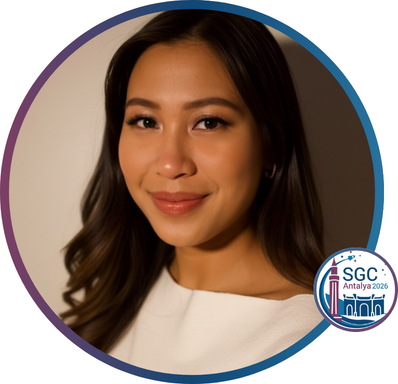
TEAM LEAD
Francesca Mison
Francesca Mison is a Lunar Systems & Strategy Engineer at the space startup, Moliri Space and a Mechanical Engineering student at Arcada UAS Finland. Her work focues on developing In-Space Assembly (ISA) strategies for tools destined for the lunar surface, alongside leading a research project measuring the U-value of lunar regolith simulants to drive informed engineering decisions. Involved in the local space community, Francesca serves as the National Point of Contact (NPoC) for Finland for SGAC and actively particpates in student-based initiatives, while fostering collaboration across the Finnish space ecosystem.

Ahmet Orhun Sivaslı
Ahmet Orhun Sivaslı graduated from Izmir University of Economics with a degree in Aerospace Engineering and is currently pursuing a Master’s degree in Space Engineering at Politecnico di Milano. His main interests include space systems engineering, autonomous Guidance, Navigation, and Control (GNC) systems, and AI applications in space technologies. He worked as an AYAP (Lunar Research Project) scholar at TÜBİTAK UZAY for nine months, contributing to activities related to Türkiye’s lunar exploration efforts. Throughout his academic journey, he has actively taken part in student organizations and space-related activities. He was among the founding members of SAAT at IUE and also contributed to IEEE IUE AESS through the organization of student-oriented technical events and discussions. Currently, he is a Software Team member of RoverTech within PoliSpace at Politecnico di Milano. Ahmet joined SGAC in 2025 and served as a PR & Communications Team member during the 3rd Middle East Space Generation Workshop (ME-SGW 2025) held in Ankara, Türkiye. He is motivated to actively contribute to the international space community through collaborative space initiatives.

Anupam Kumar
Anupam pursued her bachelor’s degree in Electronics and Communication Engineering in India, followed by a master’s degree in ESPACE (Earth Oriented Space Science and Technology) at the Technical University of Munich, specializing in Photogrammetry and Remote Sensing. She currently works at AMDC GmbH, where she contributes to projects in the defense domain by applying her interdisciplinary background.
She is an active volunteer with SGAC, where she has been involved in multiple project groups and co-authored research papers, and is also a member of Women in Aerospace, Munich. She enjoys being part of environments that bring together diverse perspectives to drive innovation, which inspired her to join the SGC organizing team, where she looks forward to building meaningful connections. Outside of work, she enjoys playing lawn tennis.
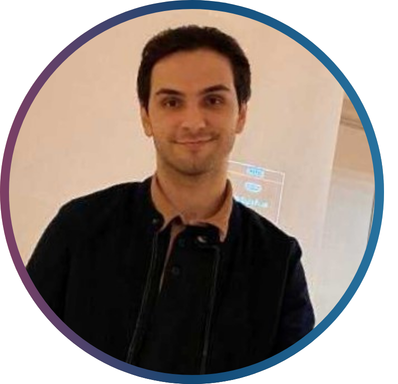
Çağrı Çıbuk
Çağrı is a computer engineering student specializing in guidance, navigation, and control systems for autonomous space systems. He is the lead developer of AIDA (An Integrated Landing Algorithm), a precision lunar landing system integrating Terrain Relative Navigation, Hazard Detection & Avoidance, currently under active development with a TÜBİTAK funding application and an abstract submission to IAC 2026 Antalya.
Beyond his technical work, Çağrı has been actively building space awareness from the ground up. He founded his university’s first space technologies club, organizing events to foster a space-conscious community on campus. He also established and led his university’s first competitive rocketry team, marking a significant step in hands-on aerospace education at his institution.
To extend this mission beyond university walls, he runs Uzaya Çağrı, a Turkish-language YouTube channel and Instagram page dedicated to inspiring people of all ages across Turkey to engage with space exploration and spaceflight.
NPOCs
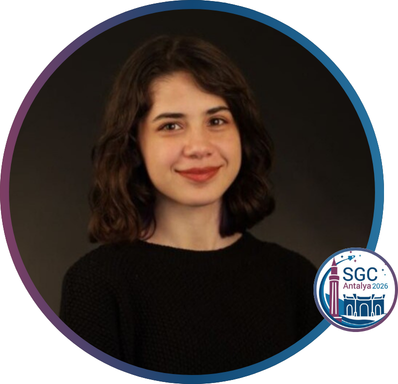
Beste Boybaşı
Beste Boybaşı is a mechanical engineer and physicist specializing in advanced propulsion systems and space technologies. Her research interests center on propulsion systems for in-space applications, with a background in lunar exploration and advanced energy technologies. Beyond her technical work, she is deeply committed to empowering the next generation of space professionals in Türkiye. She serves as National Point of Contact (NPoC) for Türkiye at the SGAC, where she supports outreach, policy development, and international collaboration initiatives. She has actively contributed to many local and regional events held by SGAC, including the 3rd Middle East Space Generation Workshop in Ankara, Türkiye.
Her work has been presented at multiple International Astronautical Congresses (IAC), and she has competed in international rocket engineering competitions. She was awarded the IAF Emerging Space Leaders Award in 2024, recognizing her as one of 30 young professionals globally emerging in the future of the space sector, and was granted participation in IAC 2024 in Milan.
Through her engineering work, contributions, and engagement in the space community, Beste is passionate about expanding opportunities for emerging space nations and building pathways for the next generation of space professionals.
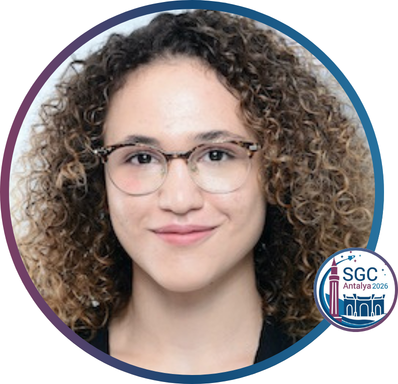
Nisanur Eker
Nisanur Eker is a systems engineer specializing in payloads for Earth observation satellites. She holds a B.Sc. in Mechanical Engineering and an M.Sc. in Aerospace Engineering from the Technical University of Munich. She has been an active member of SGAC since 2022 and has contributed to the organizing teams of SGC 2023 in Baku, E-SGW 2024 in Munich, and SG [Germany] 2025 in Stuttgart.
Nisanur currently serves as the National Point of Contact (NPoC) for Turkey, where she co-leads SGAC activities across the country. In this role, she works to increase access to SGAC opportunities for the local space community by organizing webinars, engaging with students and young professionals through career fairs, and fostering an active online network. She also focuses on connecting different space-related communities across Turkey, encouraging collaboration, knowledge exchange, and stronger engagement within the national ecosystem.
Her contributions to both the space industry and the community have been recognized with several awards, including the Emerging Space Leader Award 2022 by the IAF, as well as the SGAC Nebula Award in 2023 and 2025.


