One of the ways in which SGAC empowers its young professional and student members is by facilitating access to the world’s major space conferences. SGAC is delighted to announce that this year the Global Grants Programme will bring six outstanding SGAC members to Colorado Springs to participate in the Space Generation Fusion Forum 2026 (April 10-13) and the 41th Space Symposium (April 13-16) in Colorado Springs, USA.
We are honoured by the opportunity to recognise the work of our volunteer members to further SGAC’s efforts.
José Pedro Ferreira (Portugal)
José Pedro Ferreira is an aerospace engineer focused on resolving the environmental impacts of spacecraft demise in the atmosphere. He is currently pursuing a doctorate at the University of Southern California as a Fulbright and NASA doctoral fellow. He is experienced in spacecraft engineering, having served as the lead systems engineer for an Earth observation mission; and in experimental aerodynamics, having been a university lecturer in aeronautics and conducted research at NASA Ames Research Center and TU Delft. Jose is the current Project Groups Co-coordinator within SGAC. José served as a delegate in the 57th and 58th Scientific and Technical Subcommittees of the UN COPUOS, was the recipient of the ESA Space for Sustainability award in 2023, and the managing editor for the 2024 special issue of the Journal of Space Safety Engineering. He was also an honoree of the Forbes 30 Under 30 Portugal class of 2024. His work has been featured in the Science magazine, the New York Times, Scientific American, CBC/Radio-Canada, RTP Portugal, and Deutschlandfunk radio.
“Today’s dreams are tomorrow’s realities.”
Erik Busnello Imbuzeiro (Brazil)
Erik Imbuzeiro is a permanent staff member of the Brazilian Space Agency (AEB), where he currently serves as an Assistant within the Coordination of Strategic Studies and New Business. Driven by a strong passion for the space sector and a commitment to generating meaningful impact, Erik contributes to the coordination and advancement of Brazil’s space programme, with particular emphasis on engagement with the private sector and innovation ecosystems. He holds an academic background in Aerospace Engineering and a Master’s degree in Economics, with a focus on space and defence economics. His research interests include the role of the State in fostering innovation, legal frameworks for innovation, and the socioeconomic benefits of space activities, themes on which he has authored and co-authored several articles. In parallel, Erik serves as the Regional Coordinator for South America at the Space Generation Advisory Council (SGAC) and is a former National Point of Contact for Brazil, actively engaging young professionals and promoting space awareness across the region. He is an alumnus of the International Space University’s Space Studies Program (SSP), where he collaborated in multidisciplinary and multicultural environments. With a strong dedication to the advancement of space activities, Erik aspires to inspire others and contribute to the broader societal and economic benefits enabled by space technologies.
“I am incredibly honored and grateful to be awarded the 2026 Global Grant Programme. This recognition not only validates my commitment to SGAC but also fuels my passion for further collaboration, networking and hard work within and for the global space community.”
Selene Cannelli (Italian)
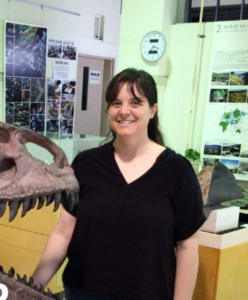
Selene is an archaeologist by training who now works in the field of origin of life and astrobiology. Outside academia, she is an addictive traveler and athlete.
After a bachelor in archaeology and a master’s in molecular biology, she joined SGAC, where she discovered that everyone has a place in space. This pushed her to discover different approaches on how she could apply her background to space exploration. She began by leading a team that won the Moon Society’s Moon Base Design Contest in 2020, served as SGAC’s HR Coordinator, Italy NPoC, and as organizing team member for three SGC and the latest AP-SGW.
As she explored her passion for space, Selene began applying archaeological approaches to the cosmos, advocating for Earth’s orbits as intangible heritage. After three years seeking the right PhD program (and many rejections), she joined the Earth-Life Science Institute (Japan), where she now investigates whether life could emerge in oceanic hydrothermal vents by studying mineral-molecule interactions that may have sparked early biochemical processes.
“SGAC is where I learned that unconventional paths belong in space. I’m honored to receive this award, and grateful to have had the chance to give back at least a little of what I gained through the years spent with this global, motivating and supportive community that is the people of SGAC.”
Brearne Chen (Australian)

Brearne Chen is a Senior Network Engineer in Australia’s space industry, working across RF engineering, antenna and system design, and satellite spectrum regulation. Her role blends technical work with regulatory analysis for international coordination and spectrum compliance, giving her a deep appreciation for the beautifully complex world of RF. She made her first international contribution through the IPMC Young Professionals Programme in 2024, presenting her team’s research on knowledge management and workforce development at the International Astronautical Congress in Milan. She then joined the SGAC community as the Logistics Lead of the SGC 2025 Organizing Team in her home city, Sydney. With a newfound passion for space conference logistics and strive for global collaboration among young professionals, Brearne now returns as Logistics Lead for SGFF 2026 in Colorado Springs.
“I’m honoured and privileged to receive the 2026 Global Grant Programme. Attending SGFF 2026 and the Space Symposium will be a series of firsts for me, including my first-ever trip to the United States. I’m so grateful to be working with such a wonderful Organising Team, and I can’t wait for everyone to come together in April. I’m also hoping for some close (and some not-so-close) encounters with the Colorado Springs wildlife. Are the squirrels friendly?“
Tania Gres (French)
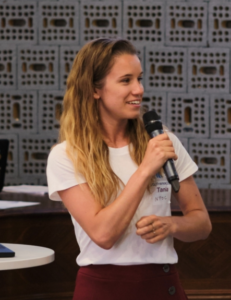
Tania is a space systems engineer currently working at Thales Alenia Space Italy on the NASA Lunar Gateway program, contributing to the development of next-generation human spaceflight infrastructure around the Moon. She’s been deeply engaged with the Space Generation Advisory Council for nearly five years, serving as National Point of Contact for France, Event Manager of SG[France]2021, organizer of the first SGAC x ECSL Model UN, SGC of Paris and Milan , and most recently Event Manager of the 9th European Space Generation Workshop in Toulouse. She also led the DIVINAS project, part of the Diversity and Gender Equality project group promoting inclusivity in astronaut selection and across the space sector. Beyond SGAC, she is the Co-Lead of the Turin Chapter of Women in Aerospace Europe, supporting professional development and visibility of women in the field. Born into a family of artists and engineers, she combines technical rigor with creativity. Outside of work, she competes in national-level gymnastics, practice rock climbing, alpinism, scuba diving, fly gliders, and volunteer with the Italian Red Cross.
“I am deeply honored to receive the Award. Since the very first day I joined the association, SGAC brought me so much on my professional and personal journey. I hope in return, to bring a piece of France, Italy and Europe to the conversation, contributing to a space sector that is ever more collaborative, diverse, and forward-looking!“
Andrew Murphy (Australian)
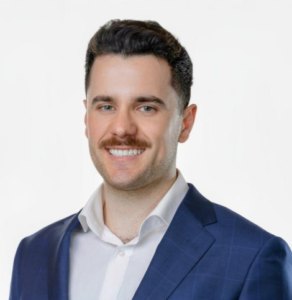
Andrew Murphy is a Senior Spacecraft Engineer for Optus Satellite & Space Systems based in Sydney, Australia, supporting high-reliability satellite operations across manoeuvre design, collision avoidance, propellant accounting, and rapid anomaly response for a multi-platform GEO fleet. He also contributes to spacecraft procurement and verification planning, with growing involvement in end-of-life and disposal strategy under operational constraints. Andrew led an industry research collaboration with Jena-Optronik and served as main author of an IAC 2025 paper on long-term on-orbit star-tracker performance and lessons learned. Within SGAC, he served as Programming Team Lead for SGC 2025 and has led and presented work through the IPMC Young Professionals Workshop on knowledge management in space organisations. He is an active contributor to the IAF Space Systems Committee and is focused on building rigorous, inclusive programs that connect engineering depth with real-world impact—advancing safe operations and responsible autonomy through global collaboration.
“I’m truly honoured to receive this award and grateful to SGAC for the opportunity. SGFF and Space Symposium are where the next wave of operators, innovators, and decision-makers align so I intend to make this count: contribute meaningfully on-site, learn fast, and return with practical insights and connections that strengthen SGAC’s execution and the community’s real-world impact“